Buying guide · Prices and Airbnb rules checked Nov 5, 2026
Noise and occupancy monitors for rentals, compared.
Short answer. Pick the risk you need to catch. Minut watches noise, crowding and smoking from one sensor and connects to Hospitable on its Pro plan. NoiseAware includes its sensor in a $15 monthly plan and watches volume. Party Squasher counts the phones on site to catch a crowd before it gets loud, but only in detached homes. Airbnb allows decibel monitors that do not record audio, outside bedrooms, if you disclose them.
Three ways to stop a party early

Most complete
Minut M3
$5/moStarter, one rental · sensor sold separately
One sensor tracks noise indoors and outside, smoking, crowding, motion and temperature, with no camera and no recording. It runs up to 12 months on its battery or can be hard-wired.
Watch out: The $5 Starter plan covers one rental. Connections to Airbnb and Booking.com start with Standard at $10, and PMS connections such as Hospitable need Pro at $15 a month.
Sensor included in the plan
NoiseAware
$15/moBilled $180 a year per property · indoor sensor included
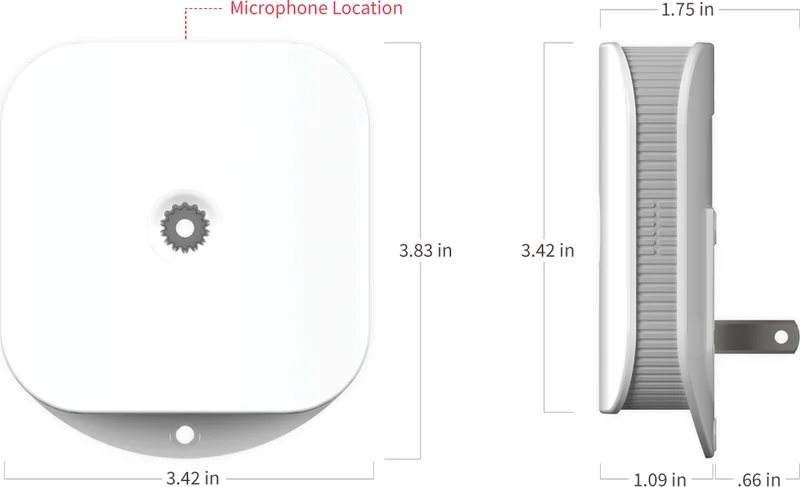
The plan ships with a plug-in indoor sensor that needs no batteries, so there is no hardware to buy up front. It reads volume only, not speech, and you set your own quiet hours and thresholds.
Watch out: An outdoor sensor costs $99 more and occupancy alerts are an optional add-on. Automated guest messages only start at 10 properties, and Hospitable lists a NoiseAware connection only as a feature request.
Counts guests, not decibels
Party Squasher
$249First year with the sensor · then $199 a year
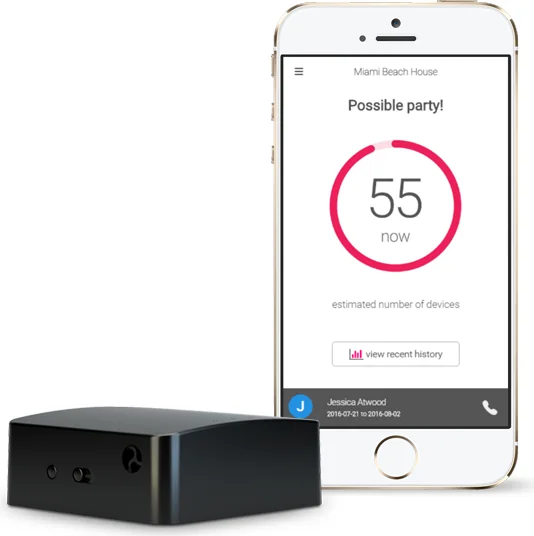
Instead of waiting for a party to get loud, it counts the phones on the property and alerts you when the number passes your limit. One plug-in sensor covers a house and its yards, with no microphone.
Watch out: It only works in detached homes. Party Squasher says it is not suitable for apartments or any home that shares walls with neighbors.
What each one watches and needs
| Monitor | What it watches | Power | Software and alerts | Fits |
|---|---|---|---|---|
| Minut M3 | Noise, smoking, crowding, motion, climate | Battery up to 12 months, or hard-wired | Hospitable, Guesty, Hostaway, OwnerRez and more on Pro | Any home, including apartments |
| NoiseAware | Noise level; crowding as an add-on | Plugs in, no batteries | Automated guest messages from 10 properties | Any home, including apartments |
| Party Squasher | Number of phones on the property | Plugs in, connects to your router | App alerts by SMS or email | Detached homes only |
Sources (7) · official pages, each with the date we checked it
What Airbnb lets you install
Since April 30, 2024, Airbnb bans every indoor security camera, even one that is switched off. Noise decibel monitors are allowed inside as long as they do not record audio and are not in a bedroom, bathroom or sleeping area. You must say in the listing that one is present, but not where it is.
Airbnb’s rules do not mention phone-counting sensors like Party Squasher. Disclosing it anyway costs nothing and avoids an argument with a guest who finds it.
Noise level or head count?
A noise monitor tells you a party is happening once it gets loud. A head count tells you a crowd is arriving before the music starts. If your house rules cap guest numbers, or your permit has an occupancy limit, crowding is the risk to watch. If neighbors complain about late nights, volume is.
Minut covers both from one sensor. NoiseAware focuses on volume and sells occupancy alerts as an option. Party Squasher only counts, and only in detached homes.
Let your software send the first warning
An alert at 1 a.m. is only useful if someone acts on it. With Minut’s integration in Hospitable, a guest with an active stay gets a message as soon as the noise runs high, before you even pick up the phone. NoiseAware offers automated guest messages only to accounts with 10 or more properties.
Questions hosts ask
Do noise monitors record what guests say?
They must not. Airbnb only allows decibel monitors that measure sound levels without recording audio. Minut says its sensor has no camera and records nothing, and NoiseAware says it reads volume, not dialogue.
Can I put a noise monitor in a bedroom?
No. Airbnb allows them inside the home but not in bedrooms, bathrooms or sleeping areas.
Do I have to tell guests?
Yes. Airbnb requires you to disclose a noise decibel monitor in the listing’s guest safety section. You do not have to say where it is.
Which one works with Hospitable?
Minut has a built-in Hospitable integration that messages guests when noise is high; on Minut’s side it needs the Pro plan. Hospitable lists NoiseAware only as a feature request.
Product images from their makers: Minut · NoiseAware · Party Squasher. Shown to identify each product; we have not photographed or tested them.